
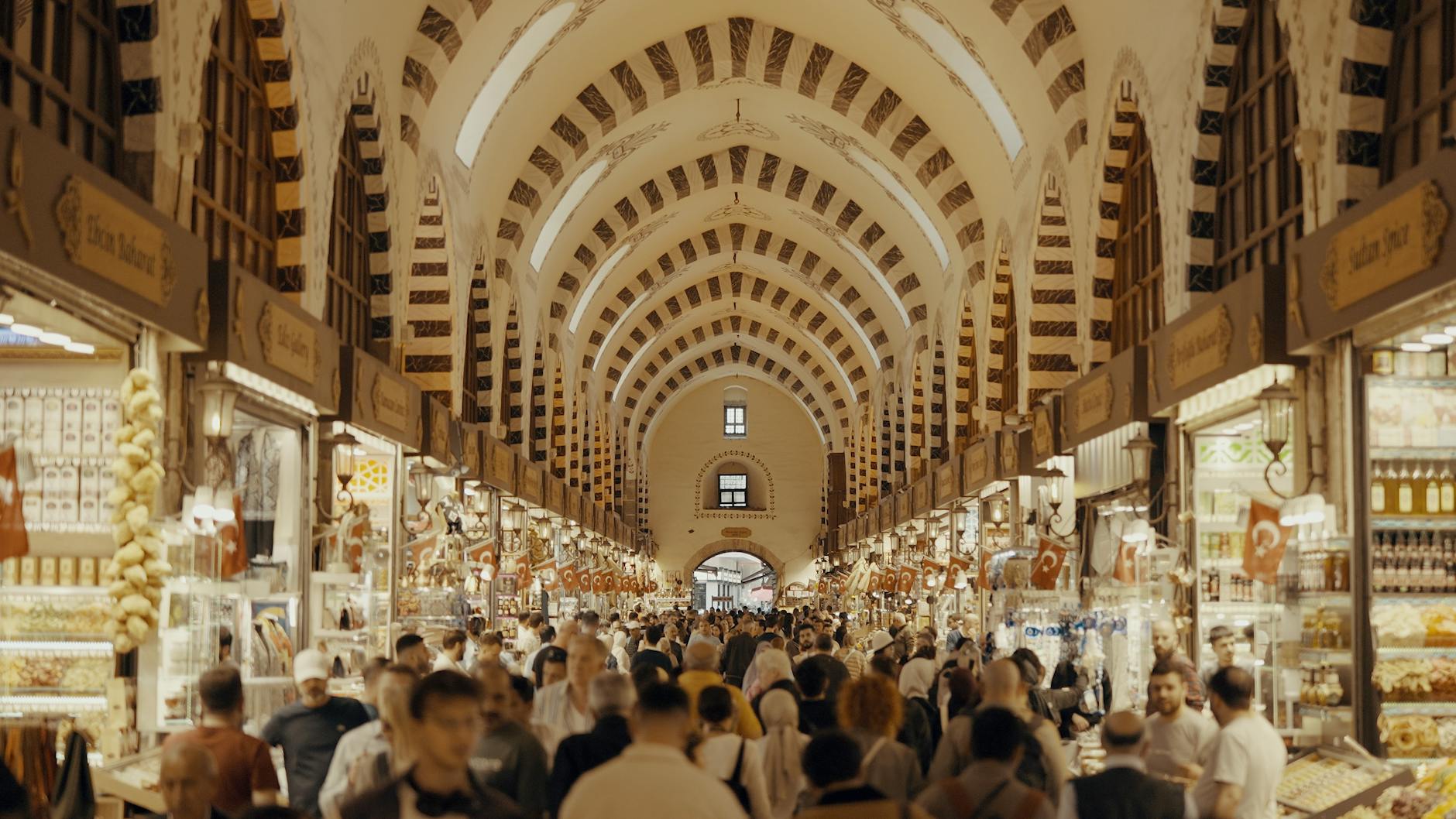
Marmara • İstanbul
Grand Bazaar
Grand Bazaar, known in Turkish as Kapalıçarşı, is one of Istanbul’s great urban interiors: a covered Ottoman marketplace where trade, craft, money, movement and memory have shaped the city for centuries.
Why it matters
Grand Bazaar is a useful field note in the cultural geography of İstanbul. It may look like a single stop, but it belongs to a wider pattern of memory, movement and local identity.
How to read it
Read it through what is specific: approach, material, setting, use and the nearby places that continue the same layer.
Marmara • Ottoman • Early modern • Republican
Field note
Grand Bazaar is a planning note, not an official visitor notice or a complete historical source. Use it to understand the approach, setting, nearby stops and route logic before checking current opening hours, access details and local conditions.
① The Hook
Grand Bazaar proves that not every meaningful stop needs to be monumental.
② The Scene
Grand Bazaar works best as part of a wider sequence. Its value appears when the visitor connects it with nearby streets, roads, buildings or views.
③ The Question
What does this stop help you notice that the route would otherwise miss?
1-minute story
Grand Bazaar is not simply a shopping district. It is one of Istanbul’s oldest systems for turning empire into daily life. Beneath its covered streets, the city becomes a network of passages, gates, workshops, courtyards, smells, voices and negotiations. The bazaar shows that Istanbul was not only ruled from palaces and sanctified by monuments; it was also sustained by trade. Known in Turkish as Kapalıçarşı, the bazaar belongs to the Ottoman commercial imagination: a protected interior city where money, craft, trust and movement could circulate under one roof. Its covered lanes make history feel less like a display and more like a habit. Visitors do not simply observe the bazaar; they are pulled into its rhythm, moving from one threshold to another. What makes Kapalıçarşı powerful is its interior logic. The visitor does not stand before a single monument. Instead, they enter a maze where direction, repetition and surprise become part of the experience. Gold, textiles, ceramics, carpets, leather, lamps and repair shops are not just tourist surfaces; they are traces of older commercial rhythms. The bazaar turns history into movement. The place also adds texture to any Istanbul heritage route because it connects imperial architecture to ordinary exchange. Hagia Sophia and Topkapı speak in the language of ceremony, faith and power. Grand Bazaar speaks in the language of bargaining, craft, repair, display and human contact. It is a reminder that cities are remembered not only through rulers and monuments, but through gestures repeated thousands of times. For Sign Hunters, Grand Bazaar matters because it adds the economic and human layer to the Sultanahmet story. After Hagia Sophia, Topkapı and Yerebatan, Kapalıçarşı shifts attention from imperial spectacle to urban circulation. It asks a sharper question: how does a city remember through trade, habit and hands?
Historical overlap
Approximate dates help the visitor read the target as a stack of time, not a flat label.
Mosques, palaces, bazaars, baths, bridges and military landscapes absorb older sites into a new civic rhythm.
A visible or inferred layer in the long memory of this target.
Excavation, restoration, museums and tourism reframe the target as shared cultural memory.
Practical field notes
Before you go
What this page is not
Use this as a field note, not an official notice.
Plan a road trip
Use Grand Bazaar as a road trip starting point.
Open Road Trip mode with İstanbul pre-filled, then build stops, overnight bases and driving days around this place.