
Marmara • İstanbul
Basilica Cistern
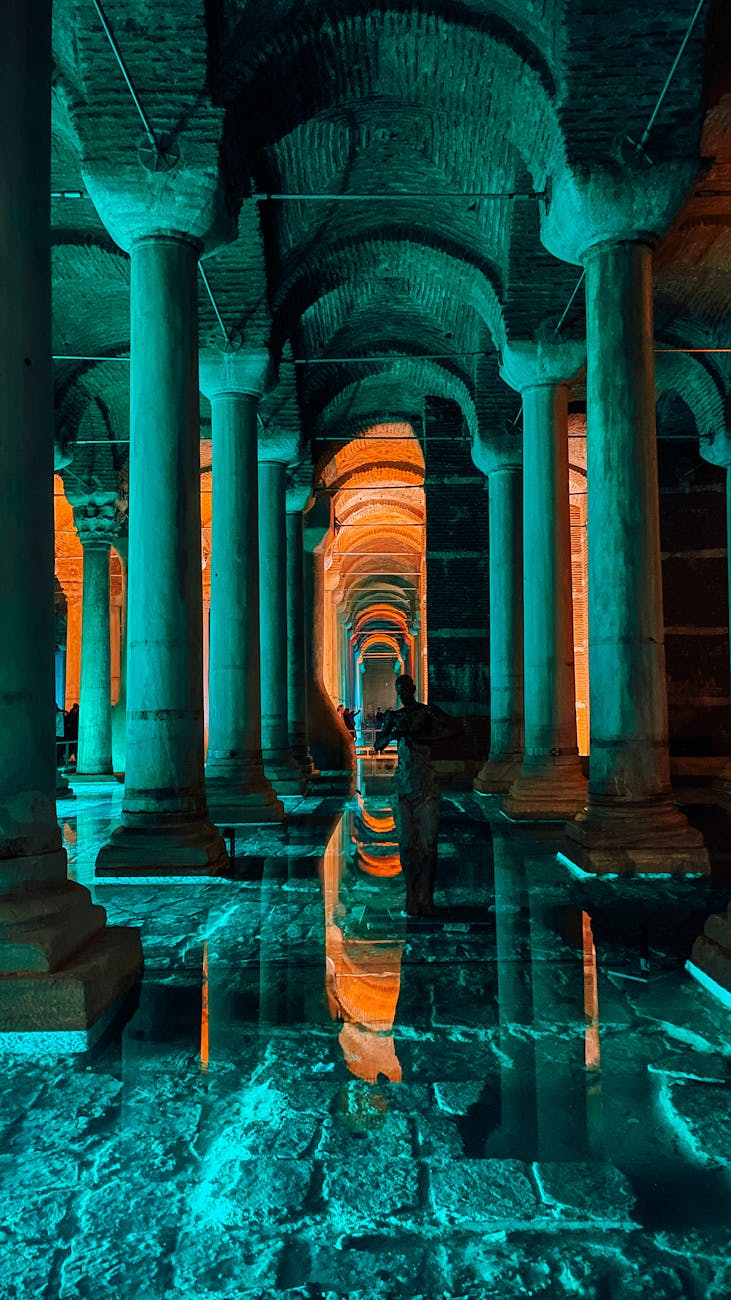
Basilica Cistern reveals Byzantine Istanbul beneath the street: columns, water, darkness and Medusa heads forming the hidden infrastructure of empire.
Why it matters
Basilica Cistern is a useful field note in the cultural geography of İstanbul. It may look like a single stop, but it belongs to a wider pattern of memory, movement and local identity.
How to read it
Read it through what is specific: approach, material, setting, use and the nearby places that continue the same layer.
Marmara • Byzantine • Ottoman • Modern Istanbul
Field note
Basilica Cistern is a planning note, not an official visitor notice or a complete historical source. Use it to understand the approach, setting, nearby stops and route logic before checking current opening hours, access details and local conditions.
① The Hook
Basilica Cistern proves that not every meaningful stop needs to be monumental.
② The Scene
Basilica Cistern works best as part of a wider sequence. Its value appears when the visitor connects it with nearby streets, roads, buildings or views.
③ The Question
What does Basilica Cistern make newly visible in İstanbul?
1-minute story
Basilica Cistern sits beneath the tourist surface of Sultanahmet like a second, quieter city. Built in the Byzantine period to store and distribute water, it reminds visitors that empires survive not only through palaces, churches and walls, but through systems hidden below the street. The cistern was part of the infrastructure that allowed Constantinople to function as an imperial capital. Its underground scale changes the visitor’s sense of the old city: above ground, Sultanahmet is ceremonial, crowded and monumental; below ground, it becomes silent, engineered and almost dreamlike. Water, stone and darkness turn the city into an experience of depth rather than skyline. The experience is almost cinematic: rows of columns fading into darkness, shallow water catching the light, and reused stone capitals carrying fragments of older worlds. The famous Medusa heads are not simply decorative surprises; they reveal how imperial cities recycled materials, meanings and myths. In the cistern, Istanbul feels less like a sequence of monuments and more like a layered machine: sacred spaces above, water and survival below. What makes Yerebatan Sarnıcı especially valuable for a cultural route is its change of rhythm. It slows the visitor down. Instead of looking up at domes, gates and towers, you look across reflections and into shadows. The place turns infrastructure into atmosphere. It also gives a strong physical sense of Byzantine continuity inside a city often read through its Ottoman and modern surfaces. For Sign Hunters, Basilica Cistern matters because it changes the way a visitor reads Sultanahmet. After Hagia Sophia and Topkapı, the cistern turns attention from spectacle to support systems. It asks a better question: what kept the city alive when nobody was looking?
Historical overlap
Approximate dates help the visitor read the target as a stack of time, not a flat label.
Domes, walls, monasteries, mosaics and frontier churches preserve the long afterlife of the eastern empire.
Mosques, palaces, bazaars, baths, bridges and military landscapes absorb older sites into a new civic rhythm.
A visible or inferred layer in the long memory of this target.
Practical field notes
Before you go
What this page is not
Use this as a field note, not an official notice.
Plan a road trip
Use Basilica Cistern as a road trip starting point.
Open Road Trip mode with İstanbul pre-filled, then build stops, overnight bases and driving days around this place.
Road Trips
Part of these road trips
A two-day cultural road trip through Istanbul’s layered imperial memory, with compact on-foot sections between nearby stops.
Nearby places
Continue the hunt nearby
Nearby internal links help travelers turn a single stop into a richer cultural route.