
Central Anatolia • Ankara
Roman Baths and Open Air Museum
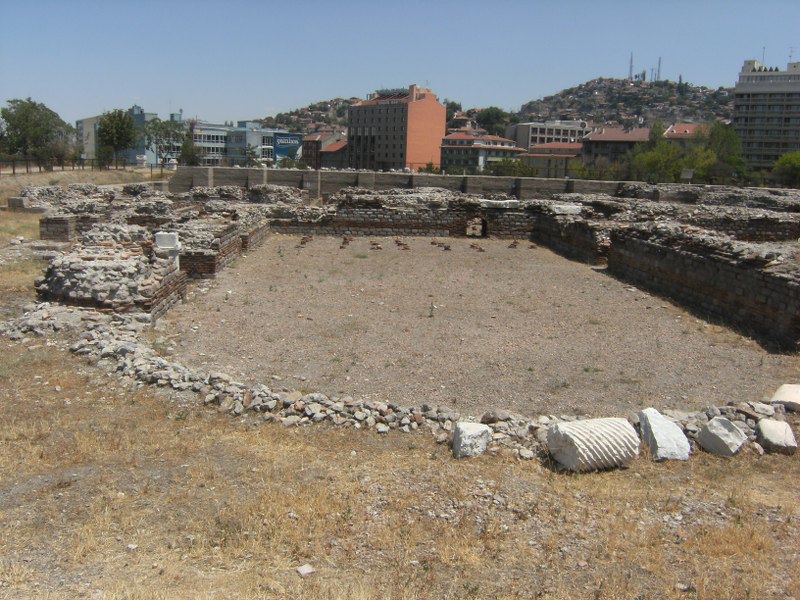
The Roman Baths and Open Air Museum preserve the remains of a large Roman bath complex in Altındağ, near the historic Ulus corridor. The site gives Ankara’s ancient city of Ancyra a visible, walkable layer through bath foundations, stone fragments, open-air archaeological display and nearby Roman-period context in central Ankara.
Why it matters
Roman Baths and Open Air Museum helps anchor Ankara in a wider cultural route. Read the stop through what it preserves, what it displays and what it makes easier to notice outside its own walls.
How to read it
Move from object to context: labels, rooms, fragments and nearby streets should work together. The best reading connects the collection with the city rather than treating it as an isolated indoor stop.
Central Anatolia • Roman
After the visit, continue with nearby streets, monuments, markets or archaeological traces. A museum becomes stronger when it changes how the surrounding city is read.
Field note
Roman Baths and Open Air Museum is a planning note, not an official visitor notice or a complete historical source. Use it to understand the approach, setting, nearby stops and route logic before checking current opening hours, access details and local conditions.
① The Hook
Roman Baths and Open Air Museum makes ancient life feel less distant and more physical.
② The Scene
The power of Roman Baths and Open Air Museum is in the gap between what remains and what must be imagined. The route becomes a negotiation between evidence and absence.
③ The Question
What makes this stop worth slowing down for?
1-minute story
The Roman Baths and Open Air Museum make Ankara’s Roman period visible at ground level. The remains belong to a large bath complex in the old Ancyra area, where public bathing, exercise, water management and civic life were part of the same urban system. Official museum material dates the main bath to the period of Emperor Caracalla in the early third century CE, while the modern open-air presentation developed after archaeological work exposed the structures and later conservation made the site easier to read. The result is archaeological rather than theatrical: a place where plan, stone and position carry the interpretation clearly. For travellers, the value is in the fragments rather than a reconstructed building. Foundations, stone blocks, columns, inscriptions and the plan of the bath help turn a busy modern district into a layered ancient landscape. The site also pairs naturally with nearby Roman and early Ankara traces around Ulus, including the Temple of Augustus area and the historic routes climbing toward the castle. Promoting this record helps the road-trip builder choose a real Ankara stop with specific coordinates, relevant Roman-period context and enough description to stand on its own without claiming current hours, ticket details or visitor rankings.
Historical overlap
Approximate dates help the visitor read the target as a stack of time, not a flat label.
Roads, baths, aqueducts, theaters and marble streets make empire visible at the scale of daily movement.
Practical field notes
Before you go
What this page is not
Use this as a field note, not an official notice.
Plan a road trip
Use Roman Baths and Open Air Museum as a road trip starting point.
Open Road Trip mode with Ankara pre-filled, then build stops, overnight bases and driving days around this place.
Nearby places
Continue the hunt nearby
Nearby internal links help travelers turn a single stop into a richer cultural route.